
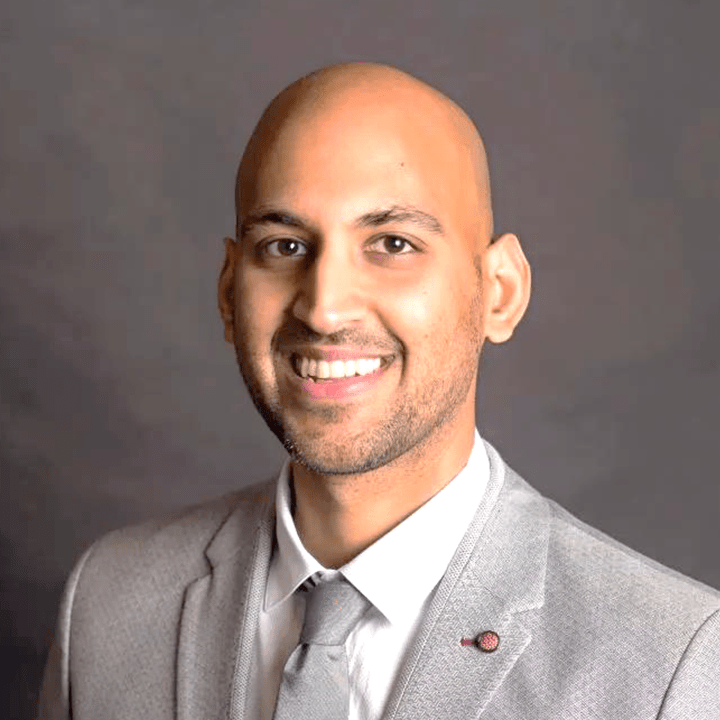
Interview with Dr. Rishin Shah – 447
In today's interview, Dr. Rishin Shah, a practicing cardiologist and small-business entrepreneur, explains that every physician can develop their own dynamic private practice by following his example.
Dr. Rishin Shah is a board-certified cardiologist and vascular specialist with more than 15 years of experience. He is the founder of Prime Heart and Vascular, serving Plano, Frisco, and Allen, Texas.
Dr. Shah emphasizes accessible care—including telehealth—and has a reputation for compassionate patient communication and mentorship. He’s known for advocating prevention, clear education, and lifestyle changes that align with long-term health, mirroring the themes my listeners appreciate about role evolution and patient-centered models.
Our Episode Sponsor
If you’re a physician with at least 5 years of experience looking for a flexible, nonclinical, part-time medical-legal consulting role…
…Dr. Armin Feldman's Medical Legal Coaching program will guarantee to add $100K in additional income within 12 months without doing any expert witness work. Any doctor in any specialty can do this work. And if you don’t reach that number, he’ll work with you for free until you do, guaranteed.
How can he make such a bold claim? It's simple, he gets results…
-
Dr. David exceeded his clinical income without sacrificing time in his full-time position.
-
Dr. Anke retired from her practice while generating the same monthly consulting income.
-
And Dr. Elliott added meaningful consulting work without lowering his clinical income or job satisfaction.
So, if you’re a physician with 5+ years of experience and you want to find out exactly how to add $100K in additional consulting income in just 12 months, go to arminfeldman.com.
Sponsor the Physician Nonclinical Careers Podcast
Did you know that you, too, can sponsor the Physician Nonclinical Careers Podcast? As a sponsor, you will reach thousands of physicians to sell your products and services or to build your following. Your message will be heard on the podcast, seen on our website, and in our newsletter and social media posts.
It’s amazing how a direct invitation to thousands of physicians on this podcast can attract listeners eager to try out your products or services.
To learn more, go to nonclinicalphysicians.com/sponsorships or just set up a short call to learn more about sponsorships at nonclinicalphysicians.com/zoomcall
We’re booked with long-term sponsors, but can offer a complimentary 2-week pilot for select partners we believe are a perfect fit for our physician audience. If that describes your business, then set up a call at nonclinicalphysicians.com/zoomcall
Starting His Own Dynamic Private Practice
Fixing the Staffing Gap
While growing his cardiology practice, he discovered a big need for qualified medical assistants. Recruiting such help was very difficult and existing sources were unreliable. So he built a solution that vetted, recruited, and trained staff for his own practice and expanded it to serve others.
His company, GoLean Health, specializes in finding good virtual medical assistant talent. Unlike other recruitment agencies, GoLean sources medical VAs worldwide, offering both English-speaking and native Spanish speakers. And using this tool, he has helped other practice owners improve productivity and relieve administrative burdens, while reducing costs and turnover.
Summary
In today's interview with Dr. Rishin Shah, we learn about the tools he uses to improve productivity and reduce costs, including AI tools, which have worked out very well. Other practice owners are encouraged to follow his lead and use GoLean.Health and other available resources to build their own dynamic private practice.
NOTE: Look below for a transcript of today's episode.
EXCLUSIVE: Get a daily dose of inspiration, information, news, training opportunities, and amusing stories by CLICKING HERE.
Links for Today's Episode:
- Prime Heart and Vascular: Dr. Rishin Shah's Practice
- GoLean Health: Virtual Medical Assistants
- Pillar Health Solutions: Nutrition and exercise services that generate revenue for your practice
- Newton Health: AI that empowers your team from first call to follow-up, saving hours and increasing revenue
- Nonclinical Career Academy – Use Coupon Code 15PERCENTOFF for the best price on the NCA MemberClub or any individual course or course “bundle.”!
- Nonclinical Career Academy MemberClub: lifetime access to all current and future content. (Also eligible for 15PERCENTOFF using this Code)
- 19 Presentations from the 2023 and 2024 Nonclinical Summits
Download This Episode:
Right Click Here and “Save As” to download this podcast episode to your computer.
Transcription PNC Podcast Episode 447
How to Build Your Own Awesome and Dynamic Private Practice
- Interview with Dr. Rishin Shah
John: Today's guest is a cardiologist who became very focused on building a dynamic and successful practice in Texas. And along the way, he discovered that his own practice needed a resource or two that wasn't readily available. So he built a new service to meet, I think, that and other needs. So today he'll share some thoughts on optimizing your practice and then how his new tools might help you as well. So Dr. Roshan Shah, welcome to the PNC podcast.
Dr. Rishin Shah: Thank you so much. Thanks for having me.
John: This is right up our alley, really. I used to do interviews with people that were just doing non-clinical things, but lately it's been about entrepreneurs and people optimizing their practices and leaving traditional practice. So I mean, this fits right in. So let's start by having you just sort of tell us a little bit about your background, clinical and that sort of thing.
Dr. Rishin Shah: Yeah, sure. So I'm an interventional cardiologist. I've been in practice for a decade now. And then for the last eight years, I've had my own practice, cardiology practice, and that's actually expanded to adding primary care, adding sleep medicine. We have a weight loss nutrition practice. But while running the business and running the practice obviously there's tons of problems we come across, tons of things that need to be worked on.
And so in the process of trying to optimize and being successful and not being burnt out, I've learned a thing or two during that time. And I've started some other businesses to try to help other practices out as well.
John: All right. So there's a lot we can learn from you and maybe even use some of your service, you know. So but let's see. One of the things I guess is just this fact that you went into private practice, you're trying to optimize things. Tell us about some of the things you did that you think kind of stand out in terms of making your practice successful that would apply maybe to everybody or to specialists whichever.
Dr. Rishin Shah: I think a skill set in terms of business that you really got to get good at is delegating. If you're not delegating, then you are the business and that's no business at all. Like it's all dependent on you. You're the key man. There's key man risk. If you ever decide want to sell it down the down the line and then you're doing work that you should be paying someone else 10, 15 dollars an hour to do. So my goal is always to practice at the top of my license. What is what is my education is about making medical decisions. It's not about making insurance decisions. It's not about getting on the phone for referrals. It's really trying to focus on that medical part of things.
So I think that was one key thing and being able to interview and recruit and find out the skills of predicting people that will be a players on your team, because in the end, who makes it? You know, it's who makes a business. It's your team. And so if you don't have a great team, it's really hard. And then the other part that kind of goes along with that is systems.
When I first started, there's a great book called the E-Myth Physician I read. And so it was all about systems and standard operating procedures. And so if you don't have those two things, it makes it really hard to get out of working in the business and working on the business.
And also prevents burnout. If you're trying to do everything as an intervention cardiologist, I'm used to going to multiple hospitals, trying to run a business, trying to care my little kids. My wife's also a physician, has her own practice. So there was a lot going on. So out of kind of necessity, I had to learn how to do these things. Otherwise, this would not be sustainable.
John: Otherwise, you're working 14 hours a day and doing everything yourself and getting burned out. And then you're going to be like, I'm out. I'm out of here. Well, let me dig in just for a minute, because these are things that come up a lot in any business. You know that. And so I want to get your opinion.
Number one, sort of. Is there a way that you found that you can best identify up front a good employee? And number two, are you one that would tend to agree with the philosophy to maybe one or two strikes and just move on, get rid of the person or the one who tends to try and train them and foster what maybe skills they don't have? So it's two sides of that coin.
Dr. Rishin Shah: I think in the end, it's the soft skills that matter a lot. If you have a good attitude, you're willing to take on work, you're willing to come with a problem solving attitude, then I don't care what your background is.
My operations director is actually has a marketing sales background, did not have a medical background at all. And so experience on one hand does matter, but does not necessarily predict how you're going to do long term. So, yeah, what I'm looking for is those communication skills that go get her attitude that like if you come to me with a problem, you're also coming to me with a solution.
It's not just saying this is going wrong, but how do you solve it? And we try as best as we can before hiring people to give them some scenarios or have them come on for a couple of weeks and test them out and telling them this is a test, we're going to see how things go.
And that's been really important. So instead of hiring someone and then six months later, like this isn't working out, it is hard going to your second question to just fire people like there is the adage, fire slow, fire fast. But in reality, it's hard. You're dealing with another human. You want to give them chances. Most people are really nice, kind people. Right. They're not doing the wrong thing. It's just they're not probably quite the right fit. Although I do know better intellectually, emotionally, it's still hard to talk to that person saying this isn't working out. So that I haven't quite mastered yet, but slowly working on it.
John: Now, what are the systems that you implemented or give us just one example would be fine. And then how I mean, it can be complicated and you can write a treatise on any one process and then train people. But any advice on that, if we're like facing issues with trying to put on paper like what our systems are?
Dr. Rishin Shah: I mean, I try to document like any general system we have, and we try to document it in a way that my eight year old daughter could understand. And especially now with AI we have created dashboards. And I'll just tell you one recently. We have a billing team that will handle a lot of billing concerns from patients. But we don't want we wanted the front line customer service people to answer a small subset where they would be comfortable. But sometimes they would try to do too much.
They want to help the patient out or the patient might be upset they want to do tell them something. And so we just create a dashboard that these are the five things that you should be able to talk about. It's a flowchart, you just click, click, click.
And if it's outside of that, so this is above what you should be doing, and please transfer to the billing team. And so that's only a couple weeks old, but that's actually already helped a lot so they know which boundaries to stay within. So that's just one example.
But there's processes of how to do prior authorizations, there's processes of the doctor each individual doctor likes things in a certain way in the chart and things like that. So as much as we can, because it's, it's when you onboard someone new is one of these processes come into play the most right, you someone leaves, and they had all their knowledge in their head. And now you're scrambling because it wasn't written down.
I don't know how to do a 99% of these things these days, right. And so getting on paper, we have, we have notion that we use as a wiki that has it all on there, AI has made it so much easier, because you can easily search nowadays, you can write up your SOPs, I at one point, I had a technical writer just to do SOPs but now, now as you record it, you get the transcript out, you put it into AI, it pops out your SOPs in five seconds. So it's never been easier.
John: Now are you using any real sophisticated AI or basically chat GPT or grok or something like that?
Dr. Rishin Shah: We are using the cloud co work that came out about a month ago. So cloud co work and work within your files and can write. So another recent example, just making we do heart monitors as a cardiologist.
And we've been trying to keep track on a Google calendar for years. And there's like 100 lines, and it's really complicated. And we've tried to switch it to like some easier Excel. And I'm not an Excel master by any means. And we tried and they weren't able to. So again, we just had whatever we had on that calendar, we had a video, we fed that transcript into cloud co work.
And it took a few variations, but within 2030 minutes, it had a much better organization much easier for my staff to use. So we're heavily using AI these days.
John: Can you spell that thing? I've never heard of that.
Dr. Rishin Shah: Cloud is by Anthropic. So CLA UDE. And they came out with this new tool called co work. They have cloud code, which is really terminal based. So you got to you know, kind of be comfortable just typing in commands. But co work is basically a UI wrapper around co work. And the great thing about that too, is there's these things called skills. So once it learns about you, if there's specific things you like, you make it a skill and it will do things the same way over and over again. So it is learning from you as well. Yeah, no, that's great.
John: That's something for people to just check out. And maybe they can save themselves several hours a week or more.
Dr. Rishin Shah: Right, right. You got you can't do patient health information, because it's not HIPAA compliant. All you just putting that out there, unless you have a signed BAA. But yeah, I mean, it's been really good from the administrative part of things.
John: Now, how big is the enterprise your practice, excluding those that maybe are just consultants, or whatever, just to give me an idea. I have another question about what you do.
Dr. Rishin Shah: Each individual practice, so the cardiology practice is small. It's me, a partner, a nurse practitioner. We have a primary care doctor, a primary care practice with a few providers. Our weight loss nutrition has like, five, like doctors and PPAs, but like 10 dieticians and things like that. And the sleep medicine practice is brand new. So each individual one necessarily isn't big, but all together decent size.
John: Okay, at this point in your growth and your evolution, do you do many one-on-one meetings, or are you usually doing group? In other words, are you, is there much of a hierarchy at this point, and you can really delegate to someone who's in the leadership position, or you're still in that main leadership, but you do more group meetings? It's just a technical question.
Dr. Rishin Shah: No, I do. I do a 30-minute huddle each day with my team. And that's really, they take care of the rest. I am an early riser, so they'll get 4 a.m. emails from me, but the emails plus a 30-minute huddle, and I'm good. And I have a great team that I trust. So there's not a need for follow-up and things like that. So that 30-minute huddle is typically good enough.
John: The reason I ask, I used to be a CMO for a hospital, and so we had hierarchy and I would have six or eight one-on-ones a week, and then other this and this kind of, and people came to hate meetings. The huddles are great, stand-up meetings, boom, get what you have to get done. So that's very helpful.
Dr. Rishin Shah: And I'm not a meeting guy, so I'm too busy, got other interests that I want to do, so yes, no.
John: That's not what most physicians like to do, that's for sure. Okay, so that's cool, and that's successful, but apparently that wasn't enough, just so you had to meet, the one I know about is the remote VAs, basically. Is that kind of the first big thing you did, other than the clinical stuff?
Dr. Rishin Shah: Yeah, that was the first kind of non-clinical. So, as you know, overhead keeps rising, insurance base or reimbursement keeps going down. I live in Dallas area, so the salaries are not low.
It's a major metropolitan area, maybe not as high as New York City, but it wasn't low either, and as a small private practitioner, we don't have the advantage of great insurance contracts. I'm not part of a big hospital system, so I can't control the insurance contracts, but obviously I can control my expenses, I can control our volume, and so one of the easiest ways to cut costs was to go offshore, and it's not just cutting costs. I had we have trouble sometimes retaining staff so going offshore, I was able to get very well-educated people.
I was able to get people where this is a career, and they're going to stick around. They are getting paid really well compared to what they would get paid in their native country, and I can recruit certain areas or stronger for certain skill sets, so in medicine, a lot of times people are in the Philippines because there's tons of nurses but having like an operations person from Latin America, having billing people from South Asia, there's just some geographic expertise in places, so I did that thinking, okay, we're all good, but when you're not managing people and they're 10,000 miles away, it's hard so I had to systematically figure out how can we get the best output, how can we make sure the work's getting done, because, yes, you can save money, but if the work's not getting done, then it doesn't really matter, so we really built up KPIs. We built up coaching.
Most people want to do a good job at the communication. Doctors have never been taught to manage, right? We don't have any business education. Some do. Some have MBAs and things like that, so it's all on-the-fly learning, so once we kind of figured out what worked for our practice, then we started offering it for other practices, and now we've gone into dental and chiropractor, and we had veterinarians as well, so my goal is, like, if I can find a solution for me, obviously, there's hundreds of people out there that are having the same problem, and so if we can help other people and make a return at the same time, I'm all about that.
John: That's pretty neat. How does that work in day-to-day practice? Let's say I'm a family doctor, I'm a cardiologist, whatever, and where are the opportunities for offshoring, I guess I would call it, but anyway, sending that out. Tell me some examples and then how they actually work to be part of the team.
Dr. Rishin Shah: Yeah, nowadays, as long as you have a computer and a voice over IP phone system most things in a medical practice do not need to be done in the office, so anything from answering the phone calls to doing prior odds, doing insurance verification, doing the billing. I have nurses that are licensed in Texas but are offshore, so you know, they'll send in prescription refills, they schedule any hospital procedures. It's really anything you can think of, so my office staff is really focused on the patient in front of them taking care of them, any in-house testing we're doing, and so they're not trying to juggle answering a phone call while the patient's at the front and it's just hard to do everything.
Most service-based businesses lose about 25 or miss 25 to 30 percent of their phone calls, so that is huge for patient satisfaction. My wife was on hold with a pulmonology practice for her dad for 45 minutes a couple weeks ago, right? That's just if you're a new patient, you're not going to, you're going to go find the next pulmonologist, and so from a revenue standpoint, from a patient satisfaction standpoint, we need those phones answered, so that's usually the greatest need, frankly speaking, so if you can get the same job done and at a lower cost, ideally a better job, frankly, but yeah, those are all ways that they can be used.
John: And so now this service is available to other people, you've got a business, a website, that sort of thing, so I believe, so what is the URL for that if people want to check it out?
Dr. Rishin Shah: Yeah, sure, it's called golean.health. We place offshore personnel in medical, dental, PT, chiropractic, veterinary, anything healthcare related practices, and we have a great team that helps support the doctors, help support the staffing, we're very involved, we help the doctors come with SOPs, KPIs to make sure it's successful, and those SOPs live on no matter what so trying to be a little bit different than many other companies out there where you may just get placed, and you know, the company kind of disappears, we want to really help make sure those practices succeed. Whatever we've learned as best practices, we're trying to optimize other practices as well.
John: Basically, if they sign on with you and they find someone suitable in your system, then chances are they're going to be just as capable as the people that you've worked with. I mean, if those people are working for you full-time, obviously they're not working for someone else, but that would be reassuring, I think, to someone who's a physician to know that the physician knows you know whether that's a competent person in terms of what they're doing.
Dr. Rishin Shah: Yeah, we have like a 95% success rate. These are humans, so there's going to be some people that don't work out, but our churn the people that leave is very small, so we've done a really good job in my opinion. We have a really good, I'm not the one doing it, frankly, it's my team I have a great team that's really, really doing it. I've been able to hire some great people to kind of lead that, lead that.
John: I got the impression before we got on this call that you're continuing to add new things to your practice. I think from what I understood, some of that's clinical, is there other, just go wherever you want to go with what you're doing, and you know, I mean, you mentioned sleep study lab or something, but that's probably, I don't know if that's what you want to talk about, or some of these other services you may have developed, so just tell us more.
Dr. Rishin Shah: Since this is non-clinical, like the nonclinical, so we started a SaaS company, a software company, delegation is golean.health, systemization, we're using a lot of AI, and then automation is kind of the third prong that I really like. So there's a lot of solutions that do, for example, patient intake. My thing has always been, why do people come into the office, do real paperwork, or why am I, as a doctor, I see chest pain all day, do I really need to ask the same five questions about chest pain all day? The answer is no. The other question is, what does a front desk person do, usually? They collect payment, give paperwork, take insurance card.
The important part, there's a friendly face, so we never wanted to get rid of that, but like all this other stuff, do you really need three front front office people, or can you have one person that smiles at the patient, says hello, and you can wait for the doctor. So trying to get all that information beforehand, so we're trying to automate all that, we're putting some AI in there, we're also adding some reactivation campaigns people miss their follow-up I would love to see my post-heart attack patients every six months but they forget, life gets in the way, we have automated being able to reach back out to them, we have a SMS service, so we're trying to just automate as much as we can.
Again, the staff isn't maybe typing or calling the same same things over and over again, anything that you do repetitively, I want to try to automate it, and the big thing now has been voice AI when people call in, I don't want to get rid of humans completely, because you still want if you're worried about your heart, you want someone empathetic on the other line.
But if you just want to call and get scheduled real quick, and why not just use AI, so I'm trying to figure out the best balance of keeping the human in the loop, but using all these new tools that we have, and we'll see how it goes, but that's kind of the project I've been working on recently.
John: I think I remember a call recently where I had a problem, I called and the person answered, did this, did that, did that, and we hung up, and I'm like, that person was like too polite, I mean, it didn't sound like it was fake it was a voice, he had the inflection, I'm like, was that AI, or was that a person, I really couldn't tell.
Dr. Rishin Shah: Yeah, they're so realistic, I mean, I'm big about telling people this is like your virtual assistant, or this is your AI assistant, if they don't want, they can push zero right away and move on, but I don't want to try to trick people into the right thinking that this is a human.
John: And you were talking about the intake automating that, and I was thinking, well the EMR for my physician is part it's a big system, and it has a lot of the intake, it gets all the information beforehand, but it's generic it's sort of like, I would think as a cardiologist, probably the people calling, you'll have that thing customized.
Dr. Rishin Shah: Yeah, ours is specialty specific, it's specialty specific.
John: Awesome, so it's definitely not going to be on Epic or whatever.
Dr. Rishin Shah: Yeah, yeah, like a dermatology one's going to want to do all about the skin like where, yeah, it doesn't make sense to have just a generic one, and we are using some AI to kind of help those workflows and things like that for that part of things.
John: Very interesting. Okay, let's see. Now, I guess we might as well just get some example of some of the clinical things you're going to, more as a business person, I think, because you're not, as a cardiologist, necessarily going to be providing the care, so tell me about that. It sounds interesting.
Dr. Rishin Shah: Yeah, we have these four practices. It's also helpful, my wife's a physician so we are a dual physician couple, and she's board certified in obesity medicine, but one of the big things is, what she does is dietary and exercise counseling, and what most people don't realize that preventive counseling through insurance is free, no out of pocket, and so, yeah, so she's been doing this for like eight years. I try to keep sending patients to her, but any friction reduces the number of patients. the vast majority did not want to go.
They didn't want to call another doctor's office. They didn't want to pay another co-pay, even though the other services are free, so I brought it into my practice. Cardiology is lifestyle. And guess what? 90% of patients sign up for seeing a dietitian and personal trainer, and so, just last year, I actually launched another company that helps other specialists. Obviously, I'm a cardiologist, so my cardiology network first provide the same services to their patients.
John: So, to help them do that, right?
Dr. Rishin Shah: It helps them. It helps their patients. It's another revenue source for the doctors, and so, so far, that's going well as well, but my patients have loved it. I love things that are win-wins, right? It's good for the patients. We're doing the right thing, and if it helps the business too, why not?
John: That all sounds really exciting and fun, and you've not been in practice that long, so you might actually survive another 20, 30 years doing cardiology.
Dr. Rishin Shah: Yeah, I love cardiology, but I think one thing is I've been able to cut back, so I'm not going when I first started, I was going to five hospitals. I was on call three out of four weekends. I was completely burnt out, right?
I was completely burnt out, so this is all from personal experience so I had to do something. My wife was like, this is not she's a physician, and she understands interventional cardiologist lifestyle, but at some point, she's like, this is not working out, right? So, we had to figure out a way to back off, and now I have the ability with exploring other interests, right? So, these are just other interests that I have, and you know, I don't have any grand ambitions, but you know, if I can follow these interests, and it can help some other people, that's great.
John: All right, well, we're going to run out of time here in a few minutes, so I really want you to maybe go through the, where we can find you for each of those things, which people might be interested in so other than golean.health, are there other?
Dr. Rishin Shah: Yeah, golean.health is the remote staffing company I have. The software and automation company is called Newton, like Isaac Newton, newtonhealth.ai. I mean, this dietary thing is called pillarhealthsolutions.com, and then you can always find me, my LinkedIn's just under my name, and my practice name is called Prime Heart and Vascular, and we're in the Dallas area.
John: All right, Prime Heart and Vascular in the Dallas area. Awesome, let's see. Well, maybe before I let you go too, I don't know, we've covered a lot of areas. I'm looking for your advice to physicians who are maybe still early in their career, and they're already getting burnt out, they're already getting frustrated, unfulfilled, blah blah burnout, whatever. Advice for them just from what you've been through so far in your career.
Dr. Rishin Shah: I think having, I have a shoot and aim mindset. You know, take action and don't overanalyze it. We're physicians, we're going to, you're going to do fine in your career, you're going to do fine financially, and be willing to spend some money, right? Like delegating, you have to spend money, right? I do not have the lowest overhead practice by any means, but I think compared to my cardiology peers, I have the one, one of the nicest like time-wise lifestyles. So I was okay with spending money to be able to have that, and I'm ever grateful.
Take action, it's okay to spend money. I know, I know some of the advice that is lower keep your costs as low as possible, but if you're spending it wisely to get you your time back but there's a great book called Buy Back Your Time. It's by a guy named Dan Martell.
Ideally, people you delegate to can do the job better than you, but one of the teachings from the book that for me was even, I was like, if they do 80 percent, but they cost this much, and your time is worth this value your time too. As a physician, your time is worth this much, not this much, and if they're doing 80 percent of the job right, that's still okay. So a few different things there.
John: Yeah, just chase the RBUs or something.
Dr. Rishin Shah: Right. Yeah, yeah. It's human, nature, right? We want to chase this, we want to keep going, but in the end if you're missing your kids birthdays, if you're missing out life, you're not exercising, and things like that your wealth's not going to any use, so.
John: No, no. Well, that's very wise, and you're doing it, so that's good, and maybe we'll have you back if I'm still doing this podcast in a few years, and see what's happening, but I really appreciate it. No, there's been a lot in here for people to think about. I think it's very useful. It's a good example, and plus you actually, I think you're going to maybe push some people to use, to try AI, which would be just in and of itself a good thing.
Dr. Rishin Shah: Right yeah. That could be helpful.
John: All right, Rishan, then now we'll say goodbye, and we'll talk again down the road.
Dr. Rishin Shah: Thank you, John.
Sign up to receive email reminders, news, and free stuff every week!
Enter your name and email address below and I'll send you reminders each podcast episode, notices about nonclinical jobs, information about free and paid courses, and other curated information just for you.
Transcription PNC Podcast Episode 447
How to Build Your Own Awesome and Dynamic Private Practice
- Interview with Dr. Rishin Shah
John: Today's guest is a cardiologist who became very focused on building a dynamic and successful practice in Texas. And along the way, he discovered that his own practice needed a resource or two that wasn't readily available. So he built a new service to meet, I think, that and other needs. So today he'll share some thoughts on optimizing your practice and then how his new tools might help you as well. So Dr. Roshan Shah, welcome to the PNC podcast.
Dr. Rishin Shah: Thank you so much. Thanks for having me.
John: This is right up our alley, really. I used to do interviews with people that were just doing non-clinical things, but lately it's been about entrepreneurs and people optimizing their practices and leaving traditional practice. So I mean, this fits right in. So let's start by having you just sort of tell us a little bit about your background, clinical and that sort of thing.
Dr. Rishin Shah: Yeah, sure. So I'm an interventional cardiologist. I've been in practice for a decade now. And then for the last eight years, I've had my own practice, cardiology practice, and that's actually expanded to adding primary care, adding sleep medicine. We have a weight loss nutrition practice. But while running the business and running the practice obviously there's tons of problems we come across, tons of things that need to be worked on.
And so in the process of trying to optimize and being successful and not being burnt out, I've learned a thing or two during that time. And I've started some other businesses to try to help other practices out as well.
John: All right. So there's a lot we can learn from you and maybe even use some of your service, you know. So but let's see. One of the things I guess is just this fact that you went into private practice, you're trying to optimize things. Tell us about some of the things you did that you think kind of stand out in terms of making your practice successful that would apply maybe to everybody or to specialists whichever.
Dr. Rishin Shah: I think a skill set in terms of business that you really got to get good at is delegating. If you're not delegating, then you are the business and that's no business at all. Like it's all dependent on you. You're the key man. There's key man risk. If you ever decide want to sell it down the down the line and then you're doing work that you should be paying someone else 10, 15 dollars an hour to do. So my goal is always to practice at the top of my license. What is what is my education is about making medical decisions. It's not about making insurance decisions. It's not about getting on the phone for referrals. It's really trying to focus on that medical part of things.
So I think that was one key thing and being able to interview and recruit and find out the skills of predicting people that will be a players on your team, because in the end, who makes it? You know, it's who makes a business. It's your team. And so if you don't have a great team, it's really hard. And then the other part that kind of goes along with that is systems.
When I first started, there's a great book called the E-Myth Physician I read. And so it was all about systems and standard operating procedures. And so if you don't have those two things, it makes it really hard to get out of working in the business and working on the business.
And also prevents burnout. If you're trying to do everything as an intervention cardiologist, I'm used to going to multiple hospitals, trying to run a business, trying to care my little kids. My wife's also a physician, has her own practice. So there was a lot going on. So out of kind of necessity, I had to learn how to do these things. Otherwise, this would not be sustainable.
John: Otherwise, you're working 14 hours a day and doing everything yourself and getting burned out. And then you're going to be like, I'm out. I'm out of here. Well, let me dig in just for a minute, because these are things that come up a lot in any business. You know that. And so I want to get your opinion.
Number one, sort of. Is there a way that you found that you can best identify up front a good employee? And number two, are you one that would tend to agree with the philosophy to maybe one or two strikes and just move on, get rid of the person or the one who tends to try and train them and foster what maybe skills they don't have? So it's two sides of that coin.
Dr. Rishin Shah: I think in the end, it's the soft skills that matter a lot. If you have a good attitude, you're willing to take on work, you're willing to come with a problem solving attitude, then I don't care what your background is.
My operations director is actually has a marketing sales background, did not have a medical background at all. And so experience on one hand does matter, but does not necessarily predict how you're going to do long term. So, yeah, what I'm looking for is those communication skills that go get her attitude that like if you come to me with a problem, you're also coming to me with a solution.
It's not just saying this is going wrong, but how do you solve it? And we try as best as we can before hiring people to give them some scenarios or have them come on for a couple of weeks and test them out and telling them this is a test, we're going to see how things go.
And that's been really important. So instead of hiring someone and then six months later, like this isn't working out, it is hard going to your second question to just fire people like there is the adage, fire slow, fire fast. But in reality, it's hard. You're dealing with another human. You want to give them chances. Most people are really nice, kind people. Right. They're not doing the wrong thing. It's just they're not probably quite the right fit. Although I do know better intellectually, emotionally, it's still hard to talk to that person saying this isn't working out. So that I haven't quite mastered yet, but slowly working on it.
John: Now, what are the systems that you implemented or give us just one example would be fine. And then how I mean, it can be complicated and you can write a treatise on any one process and then train people. But any advice on that, if we're like facing issues with trying to put on paper like what our systems are?
Dr. Rishin Shah: I mean, I try to document like any general system we have, and we try to document it in a way that my eight year old daughter could understand. And especially now with AI we have created dashboards. And I'll just tell you one recently. We have a billing team that will handle a lot of billing concerns from patients. But we don't want we wanted the front line customer service people to answer a small subset where they would be comfortable. But sometimes they would try to do too much.
They want to help the patient out or the patient might be upset they want to do tell them something. And so we just create a dashboard that these are the five things that you should be able to talk about. It's a flowchart, you just click, click, click.
And if it's outside of that, so this is above what you should be doing, and please transfer to the billing team. And so that's only a couple weeks old, but that's actually already helped a lot so they know which boundaries to stay within. So that's just one example.
But there's processes of how to do prior authorizations, there's processes of the doctor each individual doctor likes things in a certain way in the chart and things like that. So as much as we can, because it's, it's when you onboard someone new is one of these processes come into play the most right, you someone leaves, and they had all their knowledge in their head. And now you're scrambling because it wasn't written down.
I don't know how to do a 99% of these things these days, right. And so getting on paper, we have, we have notion that we use as a wiki that has it all on there, AI has made it so much easier, because you can easily search nowadays, you can write up your SOPs, I at one point, I had a technical writer just to do SOPs but now, now as you record it, you get the transcript out, you put it into AI, it pops out your SOPs in five seconds. So it's never been easier.
John: Now are you using any real sophisticated AI or basically chat GPT or grok or something like that?
Dr. Rishin Shah: We are using the cloud co work that came out about a month ago. So cloud co work and work within your files and can write. So another recent example, just making we do heart monitors as a cardiologist.
And we've been trying to keep track on a Google calendar for years. And there's like 100 lines, and it's really complicated. And we've tried to switch it to like some easier Excel. And I'm not an Excel master by any means. And we tried and they weren't able to. So again, we just had whatever we had on that calendar, we had a video, we fed that transcript into cloud co work.
And it took a few variations, but within 2030 minutes, it had a much better organization much easier for my staff to use. So we're heavily using AI these days.
John: Can you spell that thing? I've never heard of that.
Dr. Rishin Shah: Cloud is by Anthropic. So CLA UDE. And they came out with this new tool called co work. They have cloud code, which is really terminal based. So you got to you know, kind of be comfortable just typing in commands. But co work is basically a UI wrapper around co work. And the great thing about that too, is there's these things called skills. So once it learns about you, if there's specific things you like, you make it a skill and it will do things the same way over and over again. So it is learning from you as well. Yeah, no, that's great.
John: That's something for people to just check out. And maybe they can save themselves several hours a week or more.
Dr. Rishin Shah: Right, right. You got you can't do patient health information, because it's not HIPAA compliant. All you just putting that out there, unless you have a signed BAA. But yeah, I mean, it's been really good from the administrative part of things.
John: Now, how big is the enterprise your practice, excluding those that maybe are just consultants, or whatever, just to give me an idea. I have another question about what you do.
Dr. Rishin Shah: Each individual practice, so the cardiology practice is small. It's me, a partner, a nurse practitioner. We have a primary care doctor, a primary care practice with a few providers. Our weight loss nutrition has like, five, like doctors and PPAs, but like 10 dieticians and things like that. And the sleep medicine practice is brand new. So each individual one necessarily isn't big, but all together decent size.
John: Okay, at this point in your growth and your evolution, do you do many one-on-one meetings, or are you usually doing group? In other words, are you, is there much of a hierarchy at this point, and you can really delegate to someone who's in the leadership position, or you're still in that main leadership, but you do more group meetings? It's just a technical question.
Dr. Rishin Shah: No, I do. I do a 30-minute huddle each day with my team. And that's really, they take care of the rest. I am an early riser, so they'll get 4 a.m. emails from me, but the emails plus a 30-minute huddle, and I'm good. And I have a great team that I trust. So there's not a need for follow-up and things like that. So that 30-minute huddle is typically good enough.
John: The reason I ask, I used to be a CMO for a hospital, and so we had hierarchy and I would have six or eight one-on-ones a week, and then other this and this kind of, and people came to hate meetings. The huddles are great, stand-up meetings, boom, get what you have to get done. So that's very helpful.
Dr. Rishin Shah: And I'm not a meeting guy, so I'm too busy, got other interests that I want to do, so yes, no.
John: That's not what most physicians like to do, that's for sure. Okay, so that's cool, and that's successful, but apparently that wasn't enough, just so you had to meet, the one I know about is the remote VAs, basically. Is that kind of the first big thing you did, other than the clinical stuff?
Dr. Rishin Shah: Yeah, that was the first kind of non-clinical. So, as you know, overhead keeps rising, insurance base or reimbursement keeps going down. I live in Dallas area, so the salaries are not low.
It's a major metropolitan area, maybe not as high as New York City, but it wasn't low either, and as a small private practitioner, we don't have the advantage of great insurance contracts. I'm not part of a big hospital system, so I can't control the insurance contracts, but obviously I can control my expenses, I can control our volume, and so one of the easiest ways to cut costs was to go offshore, and it's not just cutting costs. I had we have trouble sometimes retaining staff so going offshore, I was able to get very well-educated people.
I was able to get people where this is a career, and they're going to stick around. They are getting paid really well compared to what they would get paid in their native country, and I can recruit certain areas or stronger for certain skill sets, so in medicine, a lot of times people are in the Philippines because there's tons of nurses but having like an operations person from Latin America, having billing people from South Asia, there's just some geographic expertise in places, so I did that thinking, okay, we're all good, but when you're not managing people and they're 10,000 miles away, it's hard so I had to systematically figure out how can we get the best output, how can we make sure the work's getting done, because, yes, you can save money, but if the work's not getting done, then it doesn't really matter, so we really built up KPIs. We built up coaching.
Most people want to do a good job at the communication. Doctors have never been taught to manage, right? We don't have any business education. Some do. Some have MBAs and things like that, so it's all on-the-fly learning, so once we kind of figured out what worked for our practice, then we started offering it for other practices, and now we've gone into dental and chiropractor, and we had veterinarians as well, so my goal is, like, if I can find a solution for me, obviously, there's hundreds of people out there that are having the same problem, and so if we can help other people and make a return at the same time, I'm all about that.
John: That's pretty neat. How does that work in day-to-day practice? Let's say I'm a family doctor, I'm a cardiologist, whatever, and where are the opportunities for offshoring, I guess I would call it, but anyway, sending that out. Tell me some examples and then how they actually work to be part of the team.
Dr. Rishin Shah: Yeah, nowadays, as long as you have a computer and a voice over IP phone system most things in a medical practice do not need to be done in the office, so anything from answering the phone calls to doing prior odds, doing insurance verification, doing the billing. I have nurses that are licensed in Texas but are offshore, so you know, they'll send in prescription refills, they schedule any hospital procedures. It's really anything you can think of, so my office staff is really focused on the patient in front of them taking care of them, any in-house testing we're doing, and so they're not trying to juggle answering a phone call while the patient's at the front and it's just hard to do everything.
Most service-based businesses lose about 25 or miss 25 to 30 percent of their phone calls, so that is huge for patient satisfaction. My wife was on hold with a pulmonology practice for her dad for 45 minutes a couple weeks ago, right? That's just if you're a new patient, you're not going to, you're going to go find the next pulmonologist, and so from a revenue standpoint, from a patient satisfaction standpoint, we need those phones answered, so that's usually the greatest need, frankly speaking, so if you can get the same job done and at a lower cost, ideally a better job, frankly, but yeah, those are all ways that they can be used.
John: And so now this service is available to other people, you've got a business, a website, that sort of thing, so I believe, so what is the URL for that if people want to check it out?
Dr. Rishin Shah: Yeah, sure, it's called golean.health. We place offshore personnel in medical, dental, PT, chiropractic, veterinary, anything healthcare related practices, and we have a great team that helps support the doctors, help support the staffing, we're very involved, we help the doctors come with SOPs, KPIs to make sure it's successful, and those SOPs live on no matter what so trying to be a little bit different than many other companies out there where you may just get placed, and you know, the company kind of disappears, we want to really help make sure those practices succeed. Whatever we've learned as best practices, we're trying to optimize other practices as well.
John: Basically, if they sign on with you and they find someone suitable in your system, then chances are they're going to be just as capable as the people that you've worked with. I mean, if those people are working for you full-time, obviously they're not working for someone else, but that would be reassuring, I think, to someone who's a physician to know that the physician knows you know whether that's a competent person in terms of what they're doing.
Dr. Rishin Shah: Yeah, we have like a 95% success rate. These are humans, so there's going to be some people that don't work out, but our churn the people that leave is very small, so we've done a really good job in my opinion. We have a really good, I'm not the one doing it, frankly, it's my team I have a great team that's really, really doing it. I've been able to hire some great people to kind of lead that, lead that.
John: I got the impression before we got on this call that you're continuing to add new things to your practice. I think from what I understood, some of that's clinical, is there other, just go wherever you want to go with what you're doing, and you know, I mean, you mentioned sleep study lab or something, but that's probably, I don't know if that's what you want to talk about, or some of these other services you may have developed, so just tell us more.
Dr. Rishin Shah: Since this is non-clinical, like the nonclinical, so we started a SaaS company, a software company, delegation is golean.health, systemization, we're using a lot of AI, and then automation is kind of the third prong that I really like. So there's a lot of solutions that do, for example, patient intake. My thing has always been, why do people come into the office, do real paperwork, or why am I, as a doctor, I see chest pain all day, do I really need to ask the same five questions about chest pain all day? The answer is no. The other question is, what does a front desk person do, usually? They collect payment, give paperwork, take insurance card.
The important part, there's a friendly face, so we never wanted to get rid of that, but like all this other stuff, do you really need three front front office people, or can you have one person that smiles at the patient, says hello, and you can wait for the doctor. So trying to get all that information beforehand, so we're trying to automate all that, we're putting some AI in there, we're also adding some reactivation campaigns people miss their follow-up I would love to see my post-heart attack patients every six months but they forget, life gets in the way, we have automated being able to reach back out to them, we have a SMS service, so we're trying to just automate as much as we can.
Again, the staff isn't maybe typing or calling the same same things over and over again, anything that you do repetitively, I want to try to automate it, and the big thing now has been voice AI when people call in, I don't want to get rid of humans completely, because you still want if you're worried about your heart, you want someone empathetic on the other line.
But if you just want to call and get scheduled real quick, and why not just use AI, so I'm trying to figure out the best balance of keeping the human in the loop, but using all these new tools that we have, and we'll see how it goes, but that's kind of the project I've been working on recently.
John: I think I remember a call recently where I had a problem, I called and the person answered, did this, did that, did that, and we hung up, and I'm like, that person was like too polite, I mean, it didn't sound like it was fake it was a voice, he had the inflection, I'm like, was that AI, or was that a person, I really couldn't tell.
Dr. Rishin Shah: Yeah, they're so realistic, I mean, I'm big about telling people this is like your virtual assistant, or this is your AI assistant, if they don't want, they can push zero right away and move on, but I don't want to try to trick people into the right thinking that this is a human.
John: And you were talking about the intake automating that, and I was thinking, well the EMR for my physician is part it's a big system, and it has a lot of the intake, it gets all the information beforehand, but it's generic it's sort of like, I would think as a cardiologist, probably the people calling, you'll have that thing customized.
Dr. Rishin Shah: Yeah, ours is specialty specific, it's specialty specific.
John: Awesome, so it's definitely not going to be on Epic or whatever.
Dr. Rishin Shah: Yeah, yeah, like a dermatology one's going to want to do all about the skin like where, yeah, it doesn't make sense to have just a generic one, and we are using some AI to kind of help those workflows and things like that for that part of things.
John: Very interesting. Okay, let's see. Now, I guess we might as well just get some example of some of the clinical things you're going to, more as a business person, I think, because you're not, as a cardiologist, necessarily going to be providing the care, so tell me about that. It sounds interesting.
Dr. Rishin Shah: Yeah, we have these four practices. It's also helpful, my wife's a physician so we are a dual physician couple, and she's board certified in obesity medicine, but one of the big things is, what she does is dietary and exercise counseling, and what most people don't realize that preventive counseling through insurance is free, no out of pocket, and so, yeah, so she's been doing this for like eight years. I try to keep sending patients to her, but any friction reduces the number of patients. the vast majority did not want to go.
They didn't want to call another doctor's office. They didn't want to pay another co-pay, even though the other services are free, so I brought it into my practice. Cardiology is lifestyle. And guess what? 90% of patients sign up for seeing a dietitian and personal trainer, and so, just last year, I actually launched another company that helps other specialists. Obviously, I'm a cardiologist, so my cardiology network first provide the same services to their patients.
John: So, to help them do that, right?
Dr. Rishin Shah: It helps them. It helps their patients. It's another revenue source for the doctors, and so, so far, that's going well as well, but my patients have loved it. I love things that are win-wins, right? It's good for the patients. We're doing the right thing, and if it helps the business too, why not?
John: That all sounds really exciting and fun, and you've not been in practice that long, so you might actually survive another 20, 30 years doing cardiology.
Dr. Rishin Shah: Yeah, I love cardiology, but I think one thing is I've been able to cut back, so I'm not going when I first started, I was going to five hospitals. I was on call three out of four weekends. I was completely burnt out, right?
I was completely burnt out, so this is all from personal experience so I had to do something. My wife was like, this is not she's a physician, and she understands interventional cardiologist lifestyle, but at some point, she's like, this is not working out, right? So, we had to figure out a way to back off, and now I have the ability with exploring other interests, right? So, these are just other interests that I have, and you know, I don't have any grand ambitions, but you know, if I can follow these interests, and it can help some other people, that's great.
John: All right, well, we're going to run out of time here in a few minutes, so I really want you to maybe go through the, where we can find you for each of those things, which people might be interested in so other than golean.health, are there other?
Dr. Rishin Shah: Yeah, golean.health is the remote staffing company I have. The software and automation company is called Newton, like Isaac Newton, newtonhealth.ai. I mean, this dietary thing is called pillarhealthsolutions.com, and then you can always find me, my LinkedIn's just under my name, and my practice name is called Prime Heart and Vascular, and we're in the Dallas area.
John: All right, Prime Heart and Vascular in the Dallas area. Awesome, let's see. Well, maybe before I let you go too, I don't know, we've covered a lot of areas. I'm looking for your advice to physicians who are maybe still early in their career, and they're already getting burnt out, they're already getting frustrated, unfulfilled, blah blah burnout, whatever. Advice for them just from what you've been through so far in your career.
Dr. Rishin Shah: I think having, I have a shoot and aim mindset. You know, take action and don't overanalyze it. We're physicians, we're going to, you're going to do fine in your career, you're going to do fine financially, and be willing to spend some money, right? Like delegating, you have to spend money, right? I do not have the lowest overhead practice by any means, but I think compared to my cardiology peers, I have the one, one of the nicest like time-wise lifestyles. So I was okay with spending money to be able to have that, and I'm ever grateful.
Take action, it's okay to spend money. I know, I know some of the advice that is lower keep your costs as low as possible, but if you're spending it wisely to get you your time back but there's a great book called Buy Back Your Time. It's by a guy named Dan Martell.
Ideally, people you delegate to can do the job better than you, but one of the teachings from the book that for me was even, I was like, if they do 80 percent, but they cost this much, and your time is worth this value your time too. As a physician, your time is worth this much, not this much, and if they're doing 80 percent of the job right, that's still okay. So a few different things there.
John: Yeah, just chase the RBUs or something.
Dr. Rishin Shah: Right. Yeah, yeah. It's human, nature, right? We want to chase this, we want to keep going, but in the end if you're missing your kids birthdays, if you're missing out life, you're not exercising, and things like that your wealth's not going to any use, so.
John: No, no. Well, that's very wise, and you're doing it, so that's good, and maybe we'll have you back if I'm still doing this podcast in a few years, and see what's happening, but I really appreciate it. No, there's been a lot in here for people to think about. I think it's very useful. It's a good example, and plus you actually, I think you're going to maybe push some people to use, to try AI, which would be just in and of itself a good thing.
Dr. Rishin Shah: Right yeah. That could be helpful.
John: All right, Rishan, then now we'll say goodbye, and we'll talk again down the road.
Dr. Rishin Shah: Thank you, John.
Sign up to receive email reminders, news, and free stuff every week!
Enter your name and email address below and I'll send you reminders each podcast episode, notices about nonclinical jobs, information about free and paid courses, and other curated information just for you.
Disclaimers:
Many of the links that I refer you to are affiliate links. That means that I receive a payment from the seller if you purchase the affiliate item using my link. Doing so has no effect on the price you are charged. And I only promote products and services that I believe are of high quality and will be useful to you.
The opinions expressed here are mine and my guest’s. While the information provided on the podcast is true and accurate to the best of my knowledge, there is no express or implied guarantee that using the methods discussed here will lead to success in your career, life, or business.
The information presented on this blog and related podcast is for entertainment and/or informational purposes only. I do not provide medical, legal, tax, or emotional advice. If you take action on the information provided on the blog or podcast, it is at your own risk. Always consult an attorney, accountant, career counselor, or other professional before making any major decisions about your career.



Leave A Comment
You must be logged in to post a comment.